
Dental Implants
Superior Dental Implants in Boulder, Brighton, and Denver, CO
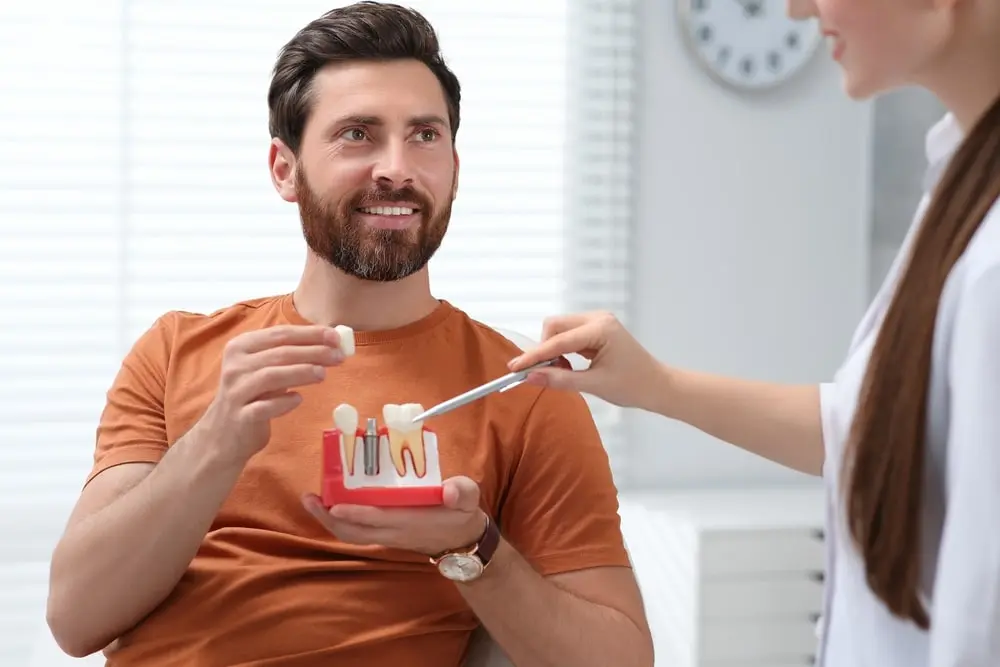
What Are Dental Implants?
Dental implants are placed during a procedure where the roots of a missing tooth are replaced with small metal posts, which resemble screws. Once these posts are placed, new, artificial teeth will be fastened onto the posts. These artificial teeth will provide the same function, feel, and look as your natural teeth.
The surgery to receive dental implants will be performed in several different stages. For this reason, you’ll need to be able to dedicate several months to the dental implant process. But if you talk to anyone who’s received dental implants in the past, they’ll assure you that the time investment will be worth it. Dental implants provide the most solid support for the new tooth and the bone and soft tissue surrounding the missing tooth. In fact, the titanium implant will fuse with your jawbone. This means that your dental implants won’t slip, make noise, or cause bone damage like dentures have been known to do.
Dental Implants Are For Those Who:
- Have one or multiple missing teeth
- Have otherwise healthy oral tissue
- Want to improve their speech
- Are unable or unwilling to wear dentures
- Are willing and able to dedicate several months to the process
- Have a jawbone that has reached its full growth
Dental Implant Expert in Denver, Boulder & Brighton
Dental implants are currently the best option for those who wish to replace a missing tooth, but it’s important to keep in mind the difference between dental implant experts and dentists who do implants. Dental implant surgery is, of course, surgery! This is why it’s so important to make sure a trained surgeon is performing your implant surgery. Our surgeons have the specialized training and education in the complicated structures of the bone, skin, muscles, and nerves, which will guarantee that you get the best possible results.
Numerous studies have found that, after more than 20 years of service, the vast majority of dental implants placed by oral and maxillofacial surgeons continue to function better and longer than those placed by general dentists.
How Much Do Dental Implants Cost?
Because no two patients or their unique dental implant needs are alike, the cost of your dental implants will vary depending on the number of appointments and procedures you’ll require. You’ll receive an initial assessment, and then our surgeons will take the time to walk you through your treatment plan and next steps. This plan will include the estimated cost and number of appointments.
FAQs About Dental Implants in Colorado
How long do dental implants last?
The titanium implant post itself, once fused to the jawbone, typically lasts a lifetime with good oral hygiene and regular checkups. The crown on top usually lasts over a decade before it needs to be replaced due to normal wear. Implants in Denver, Boulder, or Brighton all follow the same standard: long-term success rates are consistently high when placed by an experienced oral surgeon and properly maintained.
Are dental implants better than bridges or dentures?
For most patients, yes, implants are the only option that replaces the tooth root, not just the crown, which means they preserve jawbone density instead of letting it shrink over time (a common problem with dentures and bridges). They also don’t rely on healthy neighboring teeth for support the way a bridge does. Bridges and dentures are cheaper upfront and don’t require surgery, so they’re still reasonable choices for some patients, but implants generally win on longevity, comfort, and long-term jaw health.
What's the difference between All-on-4® and traditional implants?
Traditional implants replace teeth one at a time, meaning each missing tooth gets its own implant post — a good fit if you’re only missing one or a few teeth. All-on-4® takes a different approach for patients missing most or all of their teeth in an arch: instead of placing eight, ten, or more individual implants, the surgeon places just four implants at carefully calculated angles, using the densest available jawbone, and attaches a full arch of replacement teeth to them. Because it uses fewer implants and often allows a temporary bridge to be attached the same day as surgery, All-on-4 tends to be faster and less expensive than replacing every tooth individually, and it can work even for patients who’ve experienced some bone loss, since the angled placement avoids areas where bone has thinned
How long after a tooth extraction can I get an implant?
It depends on how much healthy bone is available and whether the extraction site is infection-free. In the best cases, the implant can be placed the same day as the extraction, since immediate placement avoids a second surgery and shortens the overall treatment timeline. If the tissue needs more time to settle, the surgeon will often wait 6 to 12 weeks after extraction, once the gum has healed enough to work with. In cases where the socket has lost bone volume or requires grafting to build a stable foundation, the timeline stretches to 4 to 6 months or more to give the graft time to integrate before the implant is placed. An oral surgeon will decide which of these timelines applies after an exam and imaging, and this evaluation process is the same whether you’re being seen in Denver, Boulder, or Brighton.
What can I eat after implant surgery?
In general, plan on a soft diet for the first few days, with hydration as the top priority. Aim for at least five to six glasses of fluid a day, since limited food intake early on makes it easy to get dehydrated, and skipping meals will only slow healing and leave you feeling weaker and more uncomfortable. Avoid straws for the first 5–7 days, since the sucking motion can dislodge the healing blood clot and cause more bleeding, and steer clear of hot liquids or food right after surgery. If you had general anesthesia or IV sedation, start with liquids before easing into anything solid. Once you’re ready to eat, choose soft, high-protein, high-calorie foods and chew away from the surgical site to protect it while it heals.
The exact timeline varies by procedure, and our surgeon will guide you through the process.
Does insurance cover dental implants in Colorado?
Coverage depends heavily on the specifics of your plan, so the most reliable way to know what’s covered is to contact the office directly and have your benefits verified before treatment. Since every plan is different, the Denver OMS team can check your specific benefits and walk you through what’s covered, what isn’t, and what financing options are available for any remaining cost.
Where can I find a dental implant provider in Colorado?
Denver Oral & Maxillofacial Surgery, led by Dr. Matthew Schacht, is a solid option with three Front Range locations:
- Denver — 130 Rampart Way, Suite 100 (Lowry neighborhood)
- Boulder — 2625 28th Street
- Brighton — 4700 E Bromley Ln, Suite #105
Dr. Schacht is a board-certified oral and maxillofacial surgeon trained at the University of Michigan School of Dentistry, with a residency at the University of Miami/Jackson Memorial Hospital and a fellowship focused on TMJ and orthognathic surgery in Dallas. The practice treats missing teeth, tooth extractions, wisdom teeth, oral pathology, and facial trauma reconstruction, and no referral is required to book a consultation directly. You can reach the main office at (303) 341-7151.
For more information on dental implant surgery in Colorado or to set up an appointment, please contact us at Denver Oral and Maxillofacial Surgery.
